Fram2Ham Operations Tips and Techniques
Test Like You Fly
Fram2Ham SSTV competition teams, amateur radio operators and satellite reception enthusiasts, you are about to embark on an exciting and pioneering endeavor. As Fram2Ham ground station experimenters we are sure you are anxious to receive Fram2Ham SSTV transmissions from space. But remember that as space radio pioneers, it is important that you follow the adage that all successful spaceflight organizations employ. That adage is “Test Like You Fly.”
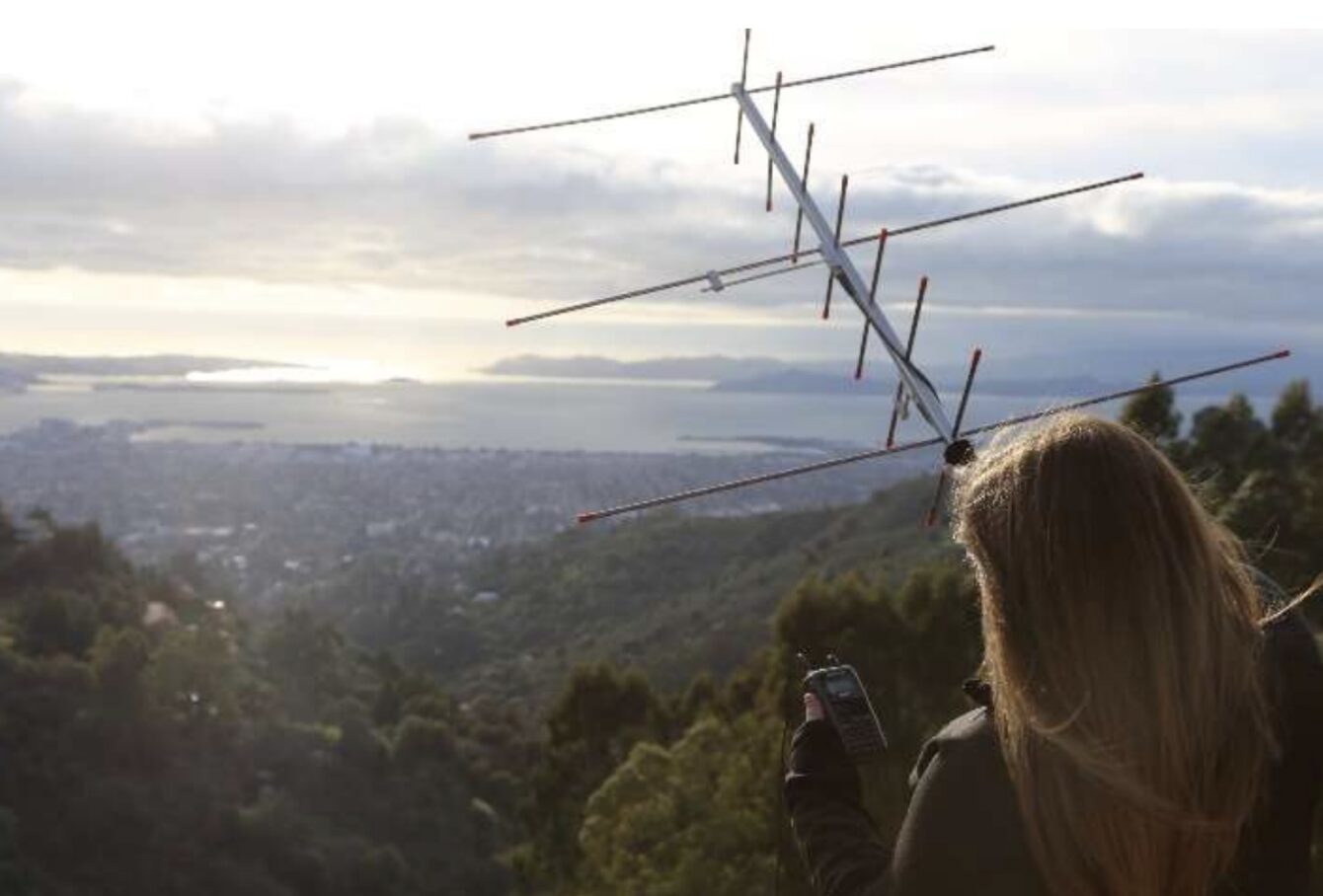
Test like you fly is a method and process that involves your team and your ground station. First, it means that you should become proficient in the reception of SSTV signals with your ground station. This is accomplished through multiple operations trials, learning from your mistakes and improving your operations until you feel comfortable that your team and your ground station are ready for SSTV reception. Second, it means that you should test your team and your ground system exactly how you will operate it during the Fram2 mission. You can do this by employing a “simulated Fram2Ham” radio station that you devise to show you can skillfully receive the Fram2Ham SSTV images from your ground station.
This Fram2Ham simulated station (Fram2Ham Simulator) can be a second radio station transmitting into a dummy load or signal attenuator that you use to validate your ground station reception. This Fram2Ham simulator transmits Robot36 SSTV images and, preferably, slowly sweeps its frequency through the 437.55 MHz signal to simulate doppler expected during a Fram2 pass.
Another “Test Like you Fly” technique is to track and receive signals from satellites with properties like you will experience from Fram2Ham. This includes receiving satellite UHF signals, like the ISS voice repeater, so you can test your doppler tracking and antenna pointing techniques.
In addition to the above, make sure you are checking all your ground station systems, end-to-end. This includes your ability to receive adequate signals from antenna to your radio and that you are getting adequate SSTV audio into your SSTV app (Audio coupling[1], or through a USB or sound connection). In addition, make sure that local noise will not impact your reception if you are audio coupled. And make sure you have tested your ground station area (portable or fixed) to ensure there will be no radio interference impacting your reception on the UHF channel.
Station Operations
- Closely follow the fixed and portable ground station recommendations described at the end of this document.
- It is essential that you employ a gained antenna that supports UHF operations on 437.550 MHz (e.g. Arrow antenna or better).
- If you are employing a fixed station, you should use an automatic azimuth-elevation pointing system with the requisite hardware and software systems that also supports automatic doppler correction.
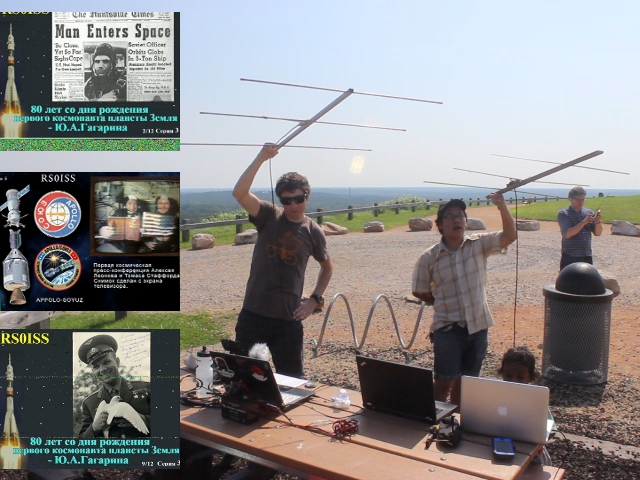
- Portable operations will require multiple (3+) people to run the station (correcting doppler, pointing antenna, correcting polarization, operating SSTV app, audio recording pass, cross-checking all the above).
- Employing up-to-date TLEs is crucial
- A 3-day mission duration is probably too short for TLE on-line services (e.g. Celestrak, etc.) due to delays.
- ARISS is working with SpaceX to develop and distribute TLEs. TLEs will be located at:
- www.ariss-usa.org/keps.txt and https://staging-int.ariss-usa.org/fram2/#KEPS
- Record all your SSTV passes. This will allow you to use this recording after the pass to document your image capture if you have some issues with your radio/SSTV app coupling. Note that some radios have built-in recorders.
Doppler Correction
Doppler correction will be critical for success. During a single pass on 437.550 MHz, the doppler correction will vary from +10 kHz at the beginning of pass (Acquisition of Signal–AOS) to 0 kHz at Time of Closest Approach (TCA), to -10 kHz at the end of pass (Loss of Signal—LOS). Note that radio receivers with 1 kHz or smaller frequency steps are best. 5 kHz steps will introduce distortion during parts of the pass.
The Fram2Ham team suggests that SSTV reception teams either use automatic correction or the doppler tables that can be downloaded at: https://www.ariss.org/doppler-correction-tables.html and are shown at the end of this writeup. It may also be possible to set the “step size” of your radio to 1 kHz and you can then use the tuning knob on your radio to adjust to the frequency closest to that shown on the doppler tables or on a tracking program.
Polarization
- There is no “magic” analysis to predict how polarization changes during a pass.
- Circularly polarized antennas should include a manual RHCP and LHCP switch. Circular polarization can switch (left or right) if the signal is reflected off of a surface .
- For those using portable antennas:
- It is suggested that at beginning of the pass that you start vertical and frequently rotate your Yagi antenna through polarizations until the signal is acquired.
- Rotate a portable Yagi for the highest S-meter signal: vertical, horizontal and in-between, as needed. And listen for the cleanest sounding (least static) signal.
- For fixed and portable stations, liberally change polarization if signal is deteriorating (and the antenna is accurately pointed and doppler is corrected).
Other Tips
- Open your squelch before each pass and keep it open. This enables you to hear what is happening and make adjustments to maximize your s-meter while you point antennas, adjust doppler and switch polarization.
- 20 dB Pre-amps and 70 cm filters are your friends. Mast mount pre-amps are best but some radios (e.g. IC-705) have pre-amps built in .
- If you are hand pointing. couple the antenna to a smartphone that has a compass app and use a Fram2 pass table. You can also use an app such as GoSatWatch on the phone attached to your antenna and make sure you employ up-to-date TLEs (Keplerian Elements) with the app or the pass table.
Fram2Ham SSTV Gallery
- The Fram2Ham SSTV Gallery will use the ARISS SSTV gallery: https://ariss-usa.org/ARISS_SSTV/
- The upload of images from contestant teams to the Gallery represents crucial documentation that will be used to select winners.
- The public is also encouraged to submit images to the Gallery.
- The Gallery will accept uploads but will not reveal images until after the event to support the competition.
- Everyone submitting an image to the SSTV gallery have the option of requesting an “award certificate” that will be sent to them via email.
- Images on the gallery will be revealed, and award certificates sent, after the competition data submission window closes. This will be approximately 72 hours after the end of the Fram2 mission. The exact deadline for competition data entry will be posted to the Discord server shortly after the return of the Fram2 mission.
- The Fram2Ham SSTV simulation, held in February 2025, used PD-120 for image downlink while Fram2Ham (Flight) will use Robot36 Color format.
- A web page was developed with Robot36 audio files of the 12 images downlinked during the Fram2Ham simulation. This web page will allow teams to practice decoding Robot36 audio files. See: https://ariss-usa.org/ARISS_SSTV/Fram2Test/
[1] Recording the SSTV sounds coming out of your radio’s speaker. The recording is then used to decode the SSTV picture later.
Minimal Ground Station Recommendations
The Fram2 mission will pioneer the use of human spaceflight amateur (ham) radio in polar orbit. Moreover, this will be the first amateur radio transmission from a Dragon vehicle. As a result, each of you will be participating in a truly unique radio signal experiment. Link budget analyses have been performed and are used for this recommendation. But it will only be via Fram2Ham flight operations that we gain a full understanding of ground station signal reception. Buckle up, space pioneers, and get ready for the Fram2Ham experiment!
After a careful review of the link budget analyses and some limited tests with the radio and antenna system, the following two station equipment scenarios are recommended to acquire the Fram2Ham SSTV images. Variations on these recommendations are possible. Valuable improvements, in order of preference, include a better antenna, preamp, and lower loss or shorter coax. But remember that an antenna with a higher gain requires more precise pointing to the Fram2 Dragon vehicle. If you can manage a better station, give preference to improving signal reception.
Fixed Station (Most Robust Approach)
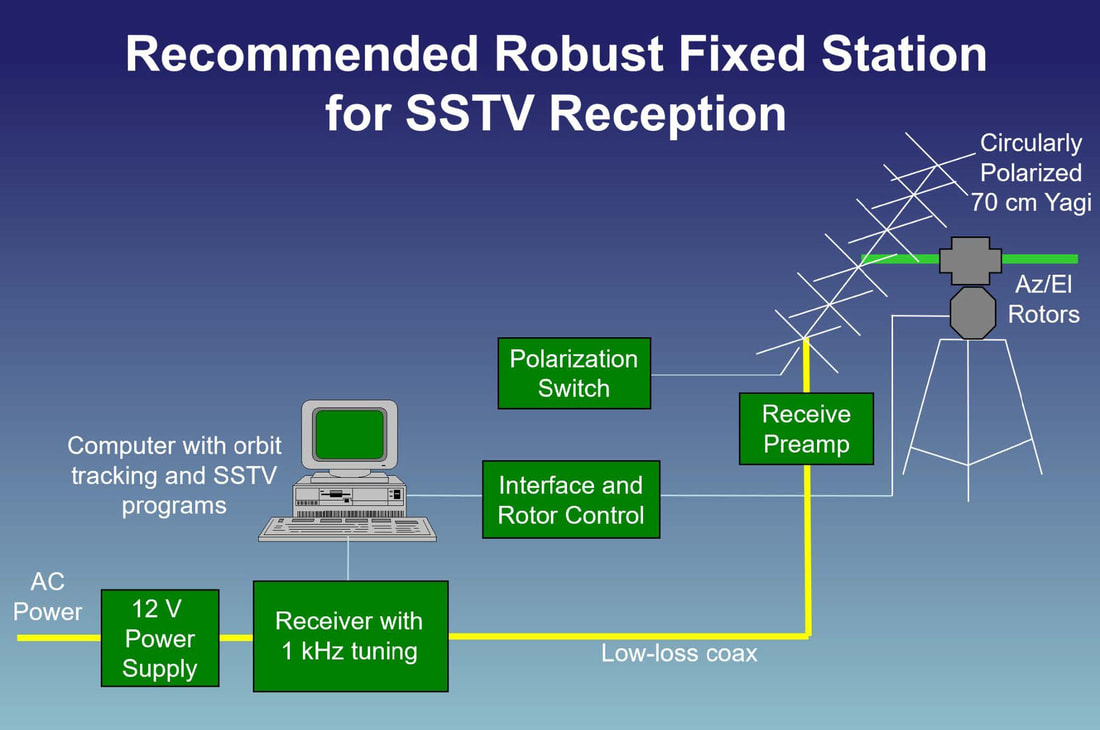
The recommended fixed station consists of:
- Receiver supporting 435-438 MHz reception with 1-kHz tuning steps, and either computer control or sufficient memories to store doppler correction frequencies.
- Low-loss coax (such as 9913 or LMR-400).
- 20 dB mast-mounted receive preamplifier.
- 7 to 14 element Yagi antenna with switched circular polarity.
- Antenna rotators for azimuth (0–360°) and elevation (0–180°), with interface for computer control.
- Computer running tracking software for antenna control (including flip mode operation) and a computer or smartphone to support SSTV reception (example software/apps include MMSSTV, YONIQ, RX-SSTV, Black Cat SSTV, or others).
Reasoning
1 kHz tuning: Staying close to the Doppler shifted downlink frequency helps keep the signal within the bandpass of the receiver. This produces better audio throughout the contact and allows a usable signal closer to acquisition and loss of signal (which means a longer contact and more SSTV images). Larger tuning steps (such as 5 kHz) are not adequate.
Radio memories: Doppler correction of downlink frequencies is required, either through computer control or manually switched radio memories.
Coax and preamplifier: To maximize signal robustness, low loss coax and a preamp help to get the best possible signal to the receiver, increasing the duration of SSTV reception.
Antenna: Signals from the Fram2 Dragon antenna are expected to become circularly polarized while passing through the ionosphere. An antenna with switched circular polarization captures a stronger signal and can eliminate (or greatly reduce) polarization-induced signal dropouts, improving the quality of the connection.
Rotators and computer control: Elevation capability of 180° with flip-mode operation prevents a signal dropout (one minute or more) if the Fram2 Dragon’s flight path crosses the azimuth rotator’s dead spot. Computer control (with an accurate time setting and the latest TLEs) gives accurate tracking for maximum signal capture.
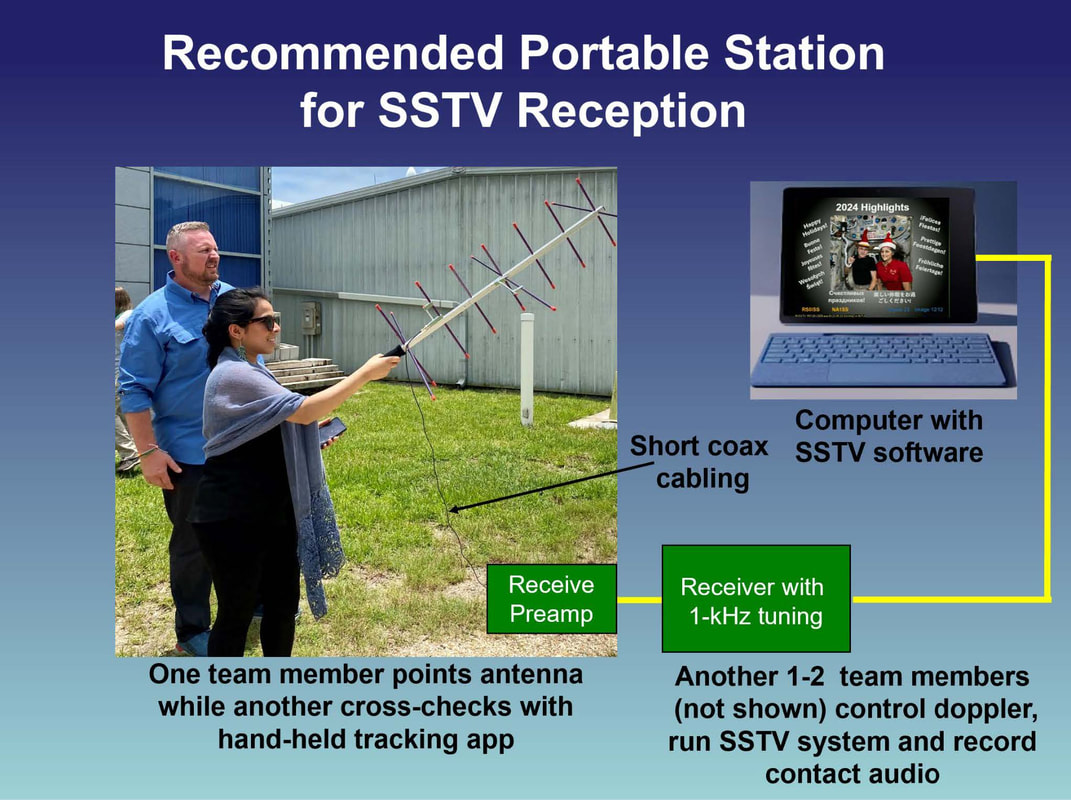
Portable Station
The portable station option, while not as capable as the fixed station configuration, will enable portable operations in the field using a handheld antenna at a lower cost than the fixed station. It is expected that the SSTV signals from the portable station will not be as crisp as those from the fixed station. But this configuration is expected to be adequate for SSTV reception.
The portable station consists of:
- Receiver supporting 435-438 MHz reception with 1-kHz tuning steps, with sufficient memories to store doppler correction frequencies.
- Short coax cabling (Heavy LMR-400 is not needed, RG-58 or LM-200 is acceptable).
- 20 dB preamplifier near the receiver input.
- 6 to 7-element portable Yagi antenna, such as an Arrow antenna
https://www.arrowantennas.com/arrowii/146-437.html or equivalent.
- Computer running tracking software or an azimuth/elevation pass table.
- Computer to support SSTV reception software (e.g. MMSSTV, YONIQ, RX-SSTV or equivalent) or employing an audio-coupled SSTV app (Black Cat SSTV, or equivalent) with a smartphone to receive the images.
- Portable operations will require multiple people to run the station (correcting doppler, pointing antenna, cross-checking, etc.).
Note that the use of inexpensive, wide-bandwidth, less sensitive SDR receivers (e.g. RTL-SDR) is currently not recommended for the SSTV contestants, given that we are not sure these receivers will provide readable SSTV images. However, for others that are not contestants, we encourage your experimentation. We are most interested in hearing from you on your results!
For all—contestants and non-contestants—we strongly encourage you to record each SSTV pass. This allows you to replay your Fram2Ham signal into your SSTV software or your smartphone app after the pass and provides some additional reliability in the event that your software or app does not work properly during the pass.
The challenge for all ground station operators will be to precisely point their antenna at Fram2 and frequently adjust for correct for doppler frequency changes. The common denominator for both fixed and portable ops is for you to acquire an up-to-date orbital element set several times during the mission.